Overview
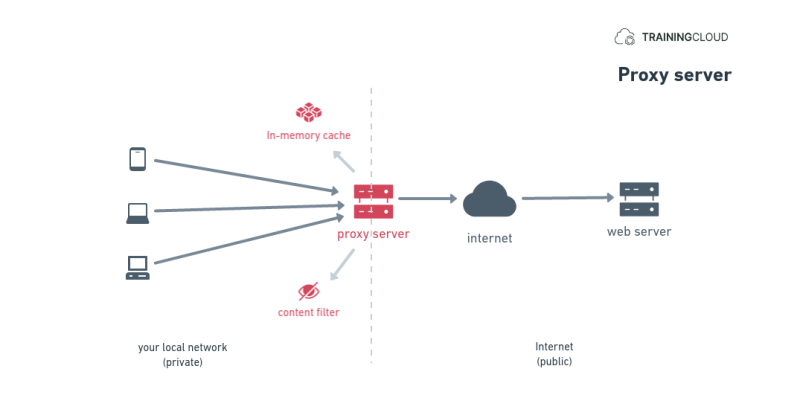
Proxy servers are typically part of your local company network, and are used two main reasons caching content and filtering / restricting content.
Filtering content
Organizations, and sometimes whole countries, can restrict their users from accessing certain sites. This filtering is often done by proxy servers, as they sit between the internal network and the internet.
Caching content
On large corporate networks, many users often visit the same websites and request the same content. Proxy servers cache content that they receive and serve that instead on future requests.
Some satellite broadband providers also cache (and compress) often-requested content on their ground stations, which reduces bandwidth.
Why are proxy servers relevant?
Even though you, as a website developer, have no control over proxy servers that are set up on other people's network, you may find yourself having to figure out why certain visitors see fresh content while others are still seeing outdated content.
One of the reasons may be that they are accessing the internet through a proxy server that caches content for too long.
In that case, using a cache-busting link (see Introduction to Caching - Overview) may help users behind a proxy server retrieve a fresh copy of their content.
Summary
- Proxy servers are often installed on company networks.
- Proxy servers are used to filter content and cache retrieved content.
- Cache-busting links may help users force a proxy server to get a fresh copy of the requested content.